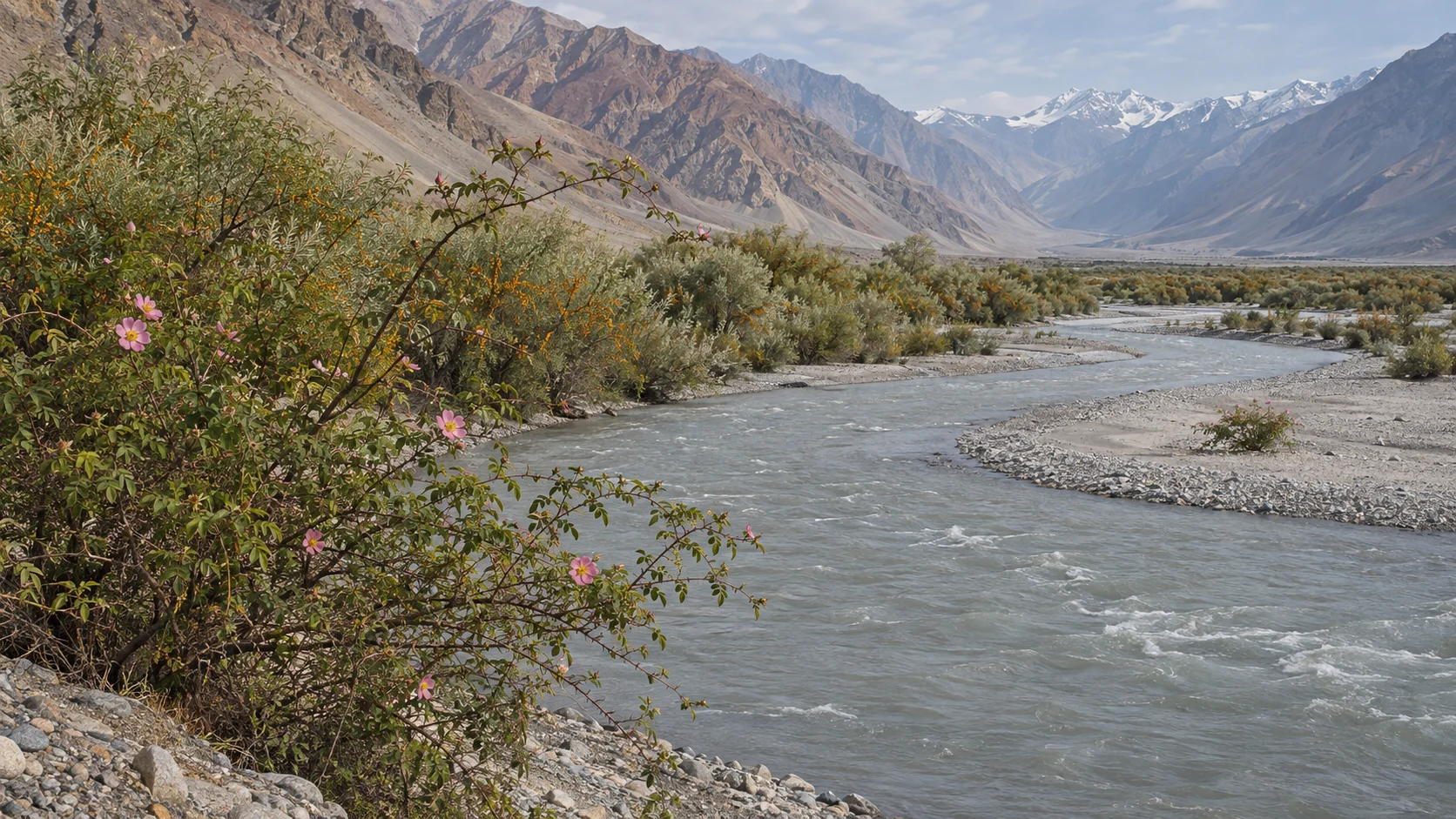
A river winding through a high desert valley in Ladakh, with wild rose and sea buckthorn on its banks and snow peaks beyond.

ལ་དྭགསLadakh, India

Sea buckthorn from the high valleys of Ladakh

Amaley’s is a sea buckthorn product line sourced in Ladakh: juice, jam, seed and pulp oils, leaf tea, supplements and skincare.

Where it grows

A shrub of the cold desert

Sea buckthorn (Hippophae rhamnoides) grows wild along the rivers of Ladakh, in Nubra, Suru, Changthang and Zanskar. It stands hard winters and hot, dry summers, and bacteria in its roots fix nitrogen in thin, sandy soil.
9,267 ha
of sea buckthorn in Ladakh, about 70% of India's total1
−43 °C to +40 °C
the range of temperatures the shrub stands2
24 hours
the time within which picked berries should be pulped or frozen1
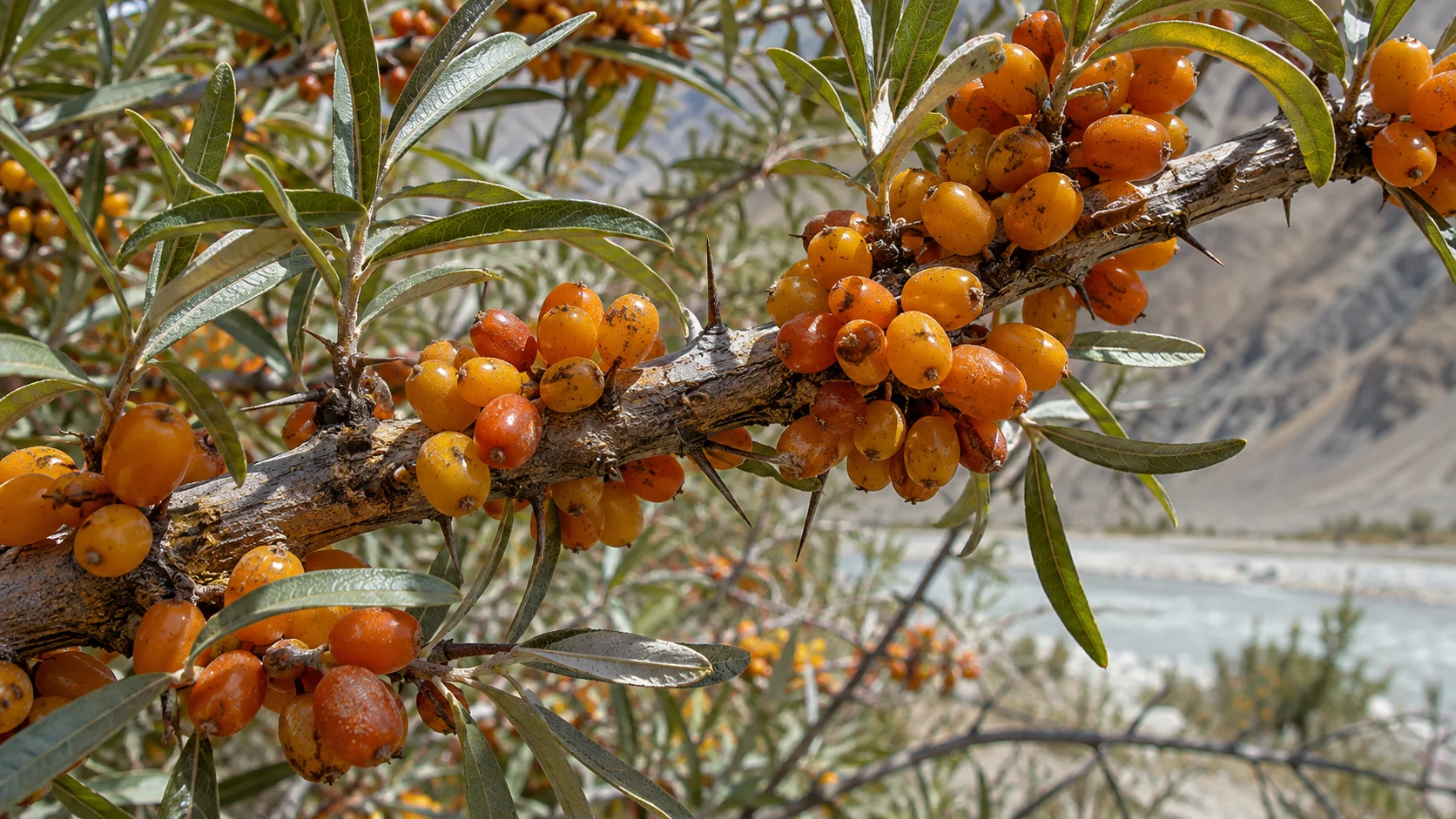
Clusters of orange sea buckthorn berries held tight against a thorny branch, with narrow silver-green leaves.

The berry

Small, orange and sharply sour

The berries sit tight against thorny branches, so harvesting is slow hand work. Each one holds soft pulp around a single dark seed, and both the pulp and the seed carry oil.

In Ladakh most of the crop still grows wild, and only a small share of it is picked each year.

The thicket

A thicket is a home

Wild sea buckthorn is more than a crop. Birds, insects and larger animals feed and shelter in the thickets, and the roots hold the soil of the riverbanks together.4
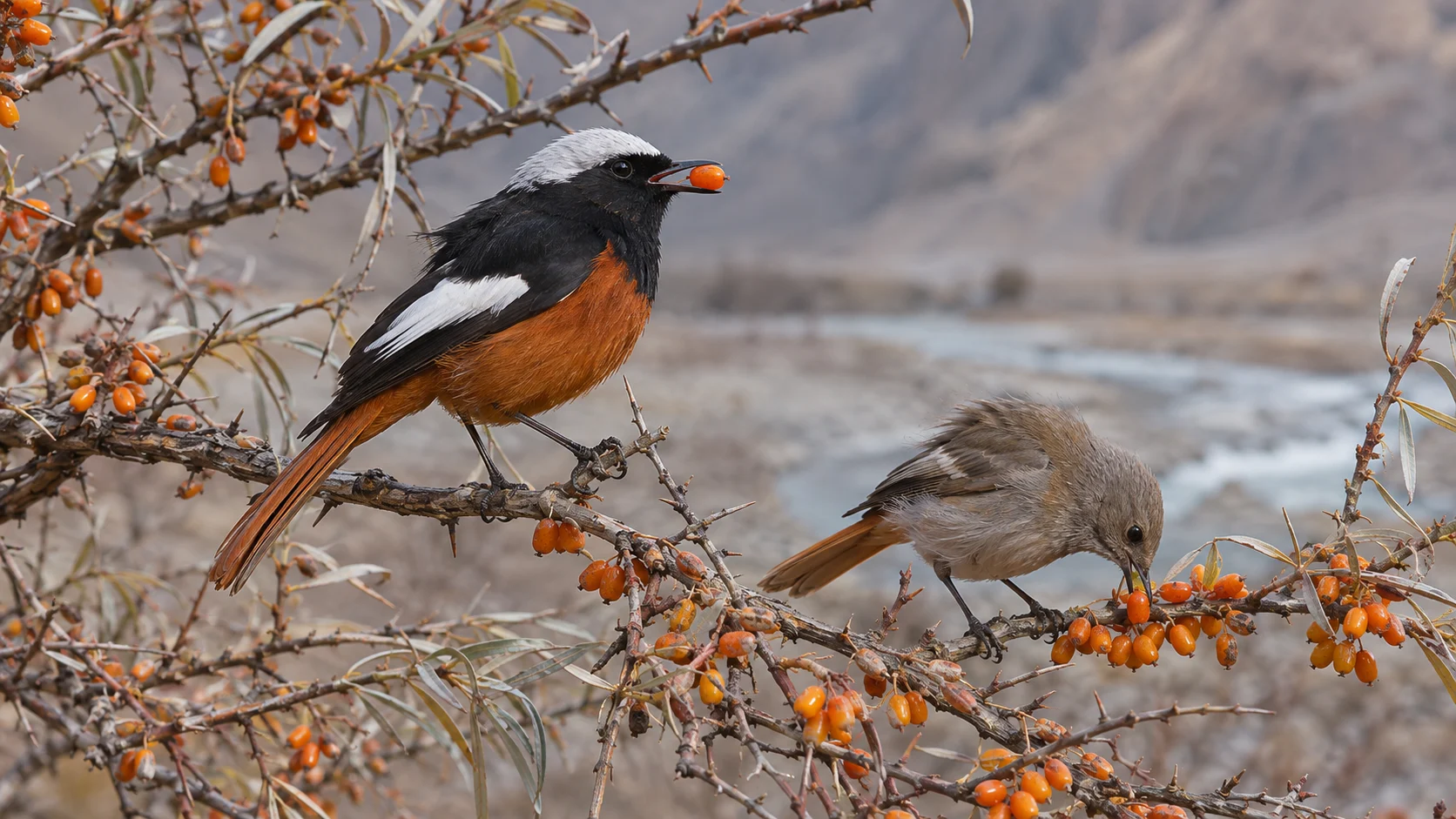
A black, rust and white redstart holding an orange berry in its beak on a sea buckthorn branch, with a second, grey-brown bird feeding beside it.
Güldenstädt's redstartThis mountain bird spends the winter in sea buckthorn scrub and feeds on the berries.5
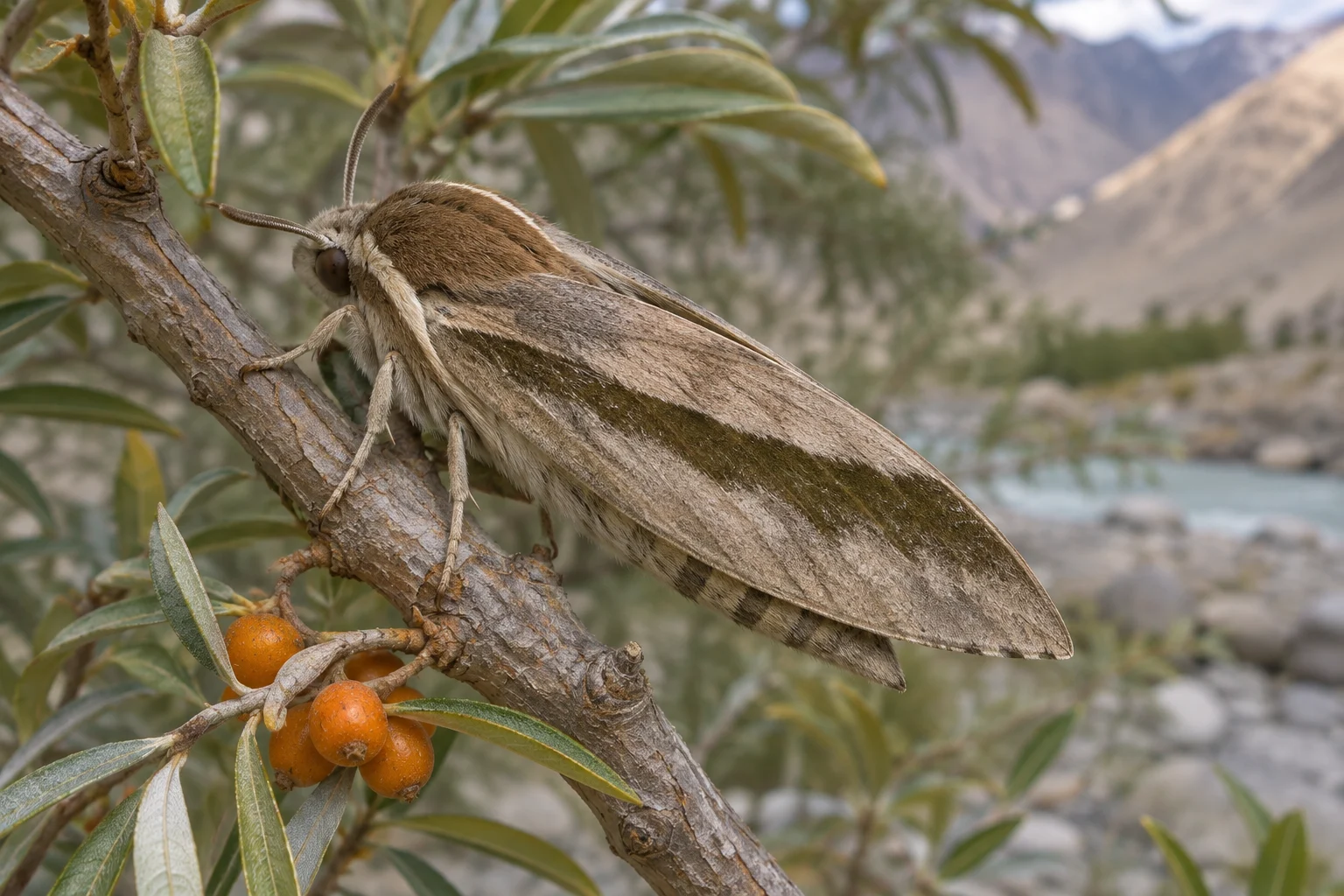
A large brown and olive hawk moth resting on a sea buckthorn branch above a few orange berries.
Sea buckthorn hawk mothHyles hippophaes lays its eggs on the shrub. In 2016 it was recorded in Nubra again, about a hundred years after it was last seen in Ladakh.6
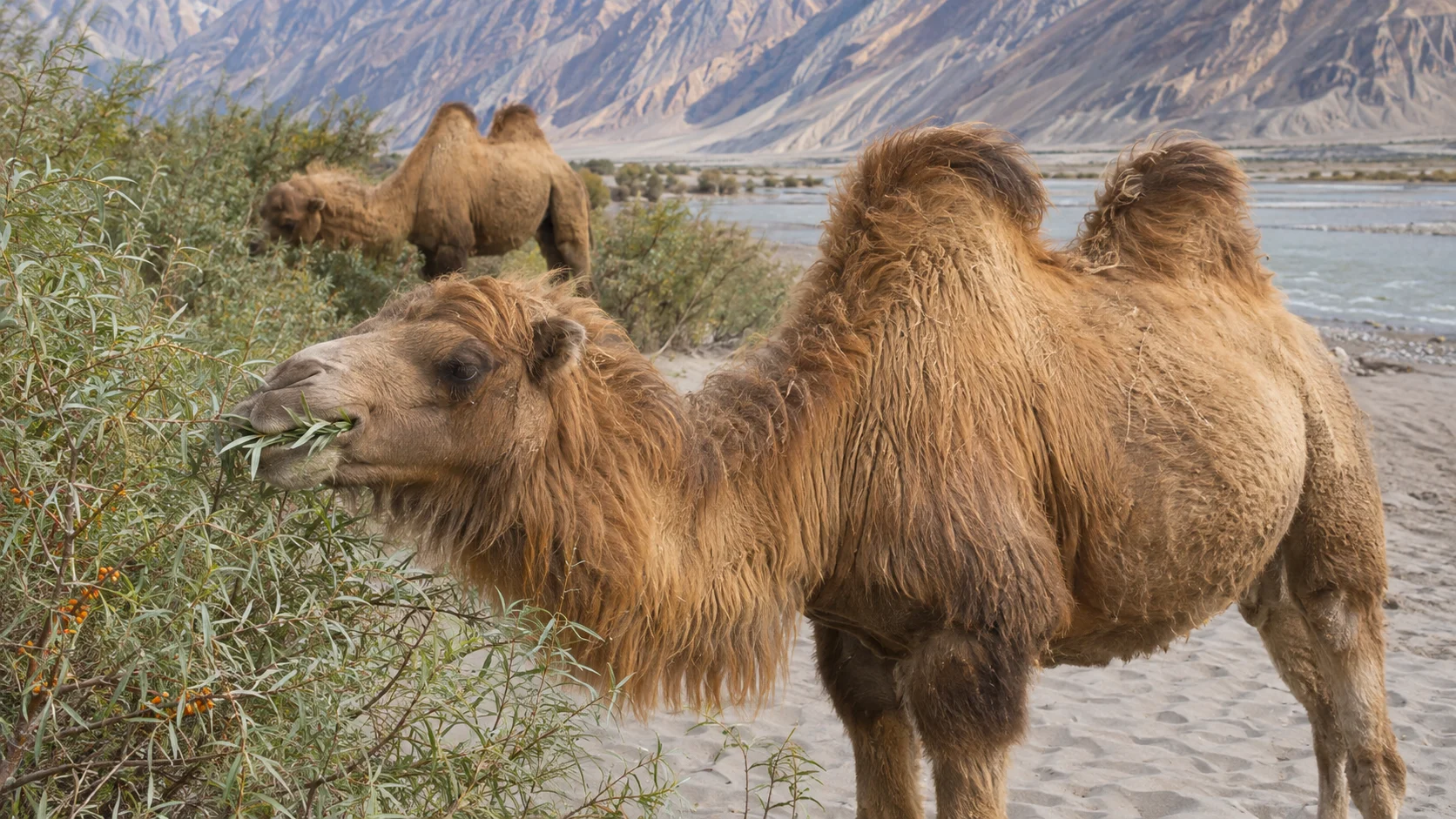
Two shaggy double-humped camels on river sand, one eating leaves from a sea buckthorn bush.
Bactrian camelsDouble-humped camels browse the thickets on the sand flats of the Nubra valley.
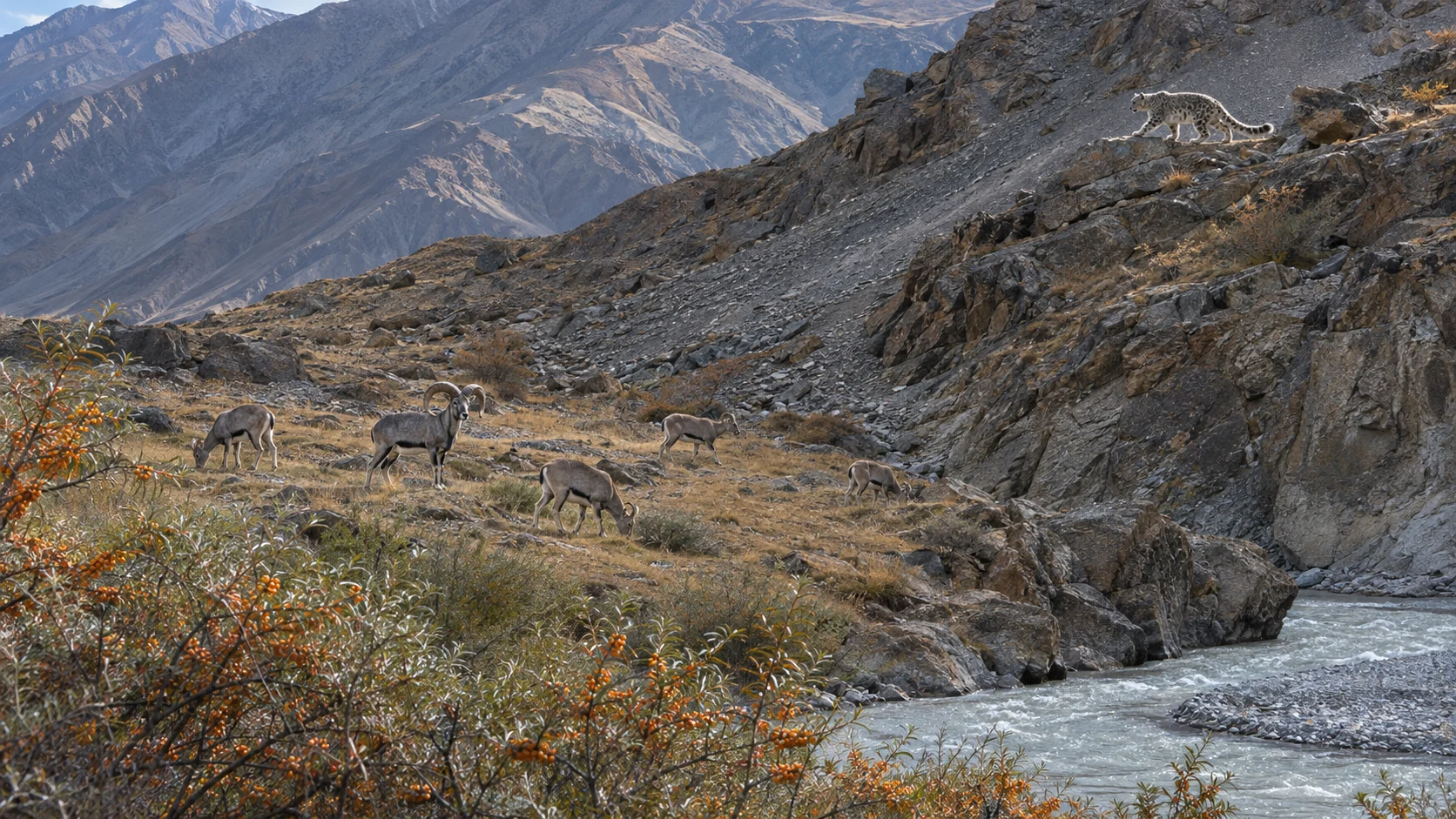
Blue sheep grazing a rocky slope above a river lined with sea buckthorn, with a snow leopard walking along the ridge above them.
Blue sheep and snow leopardSnow leopards and their prey depend on the healthy ecosystems that these plants support.3

The villages

It grows right up to the village walls

Ladakh’s villages are flat-roofed houses of stone and mud brick, set among small barley fields. Sea buckthorn lines their paths, field edges and streams, and it is picked by the people who live beside it.
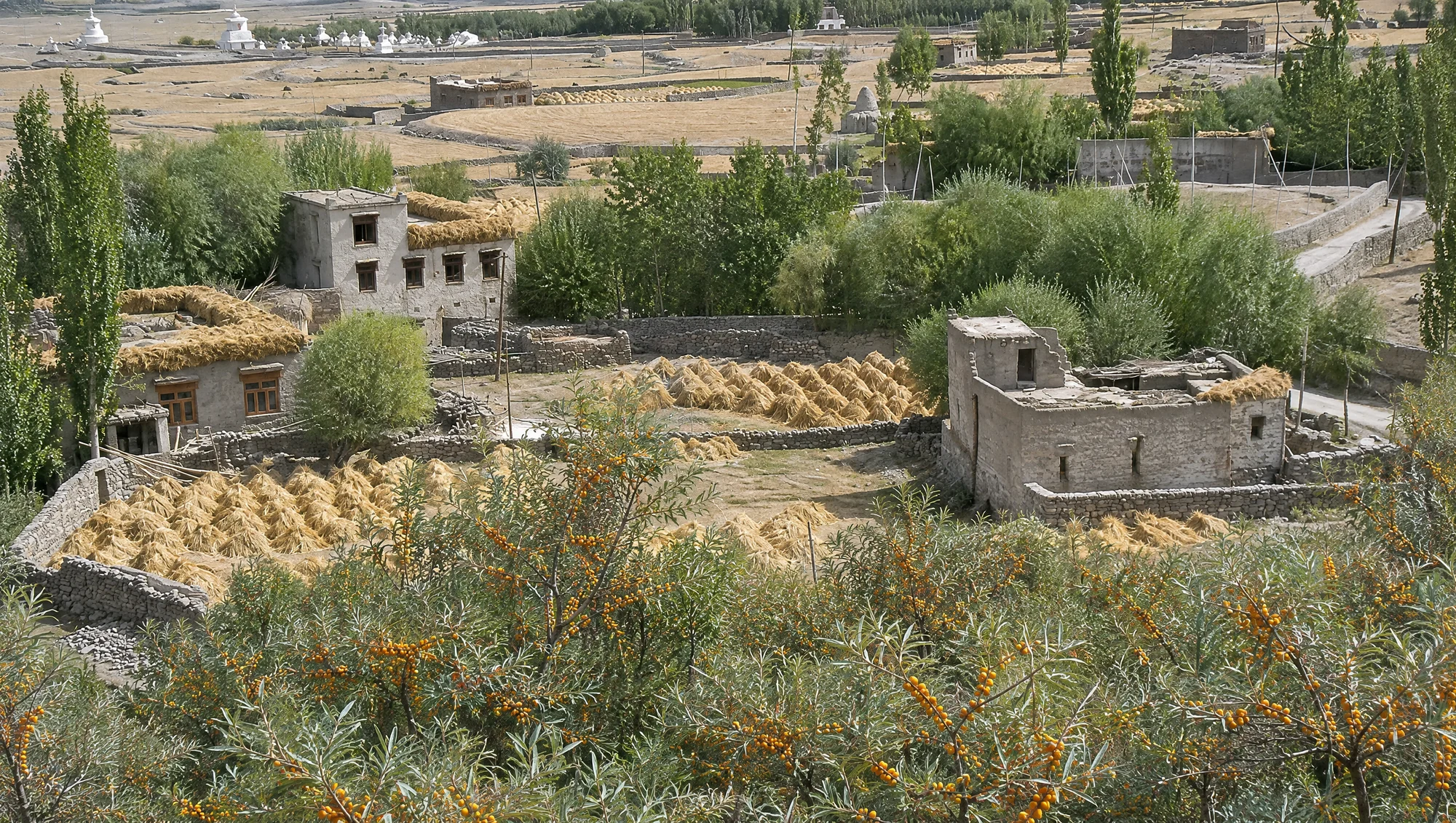
A Ladakhi village at barley harvest, seen from above: flat-roofed stone houses with fodder on the roofs, walled yards full of golden barley sheaves, poplars and willows, and sea buckthorn bushes with orange berries in the foreground.

Tradition

Known to the amchis

Sea buckthorn has long been used in Sowa Rigpa, the traditional medicine of Ladakh, which is practised by healers called amchis.

Its use is recorded in classical Tibetan medical texts.2
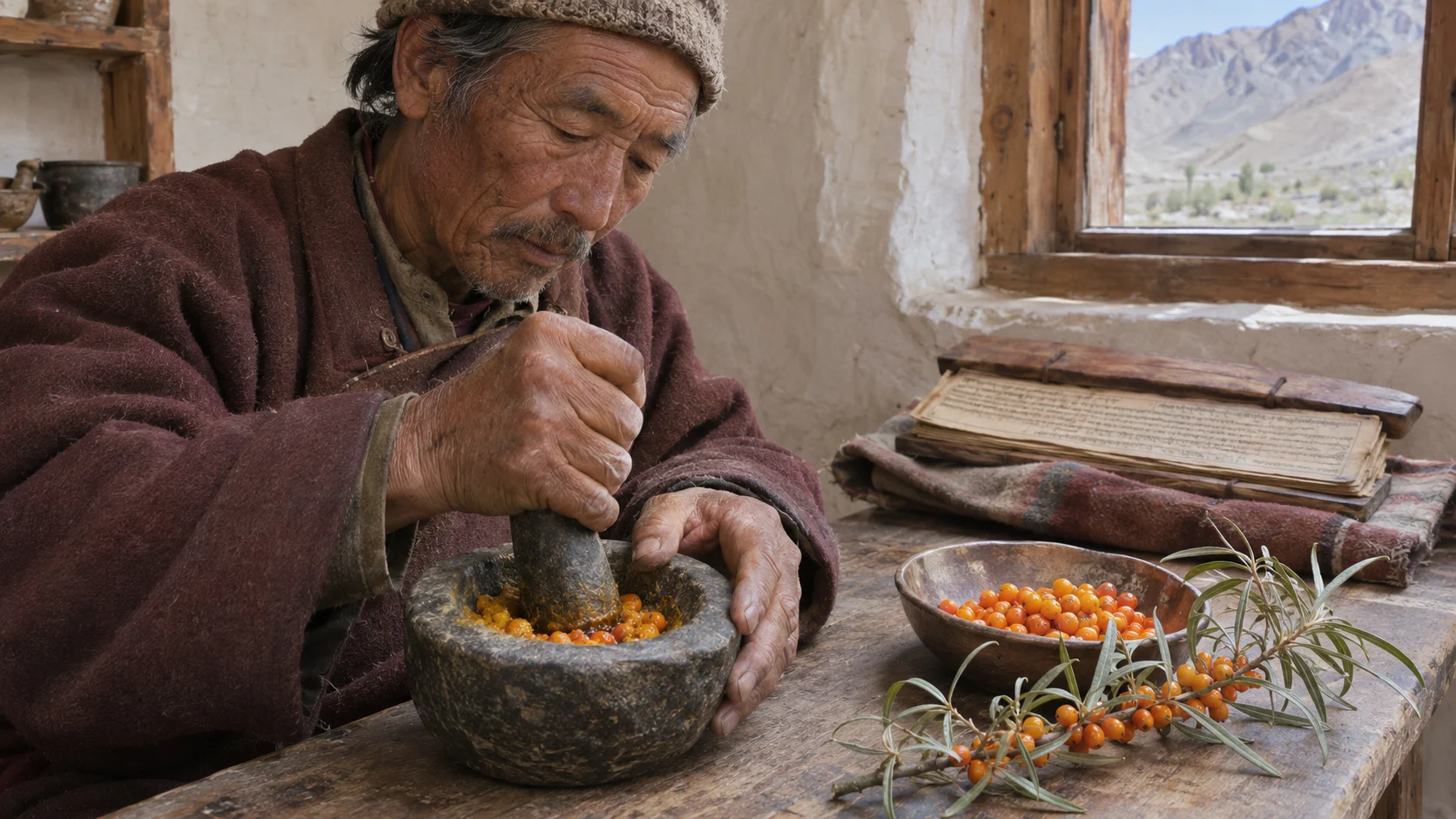
An elderly man in a maroon wool robe grinding sea buckthorn berries in a stone mortar, beside a bowl of berries, a berry sprig and a bound manuscript.

The line

Juice, jam and oil

The first products in the line, from Ladakh sea buckthorn.
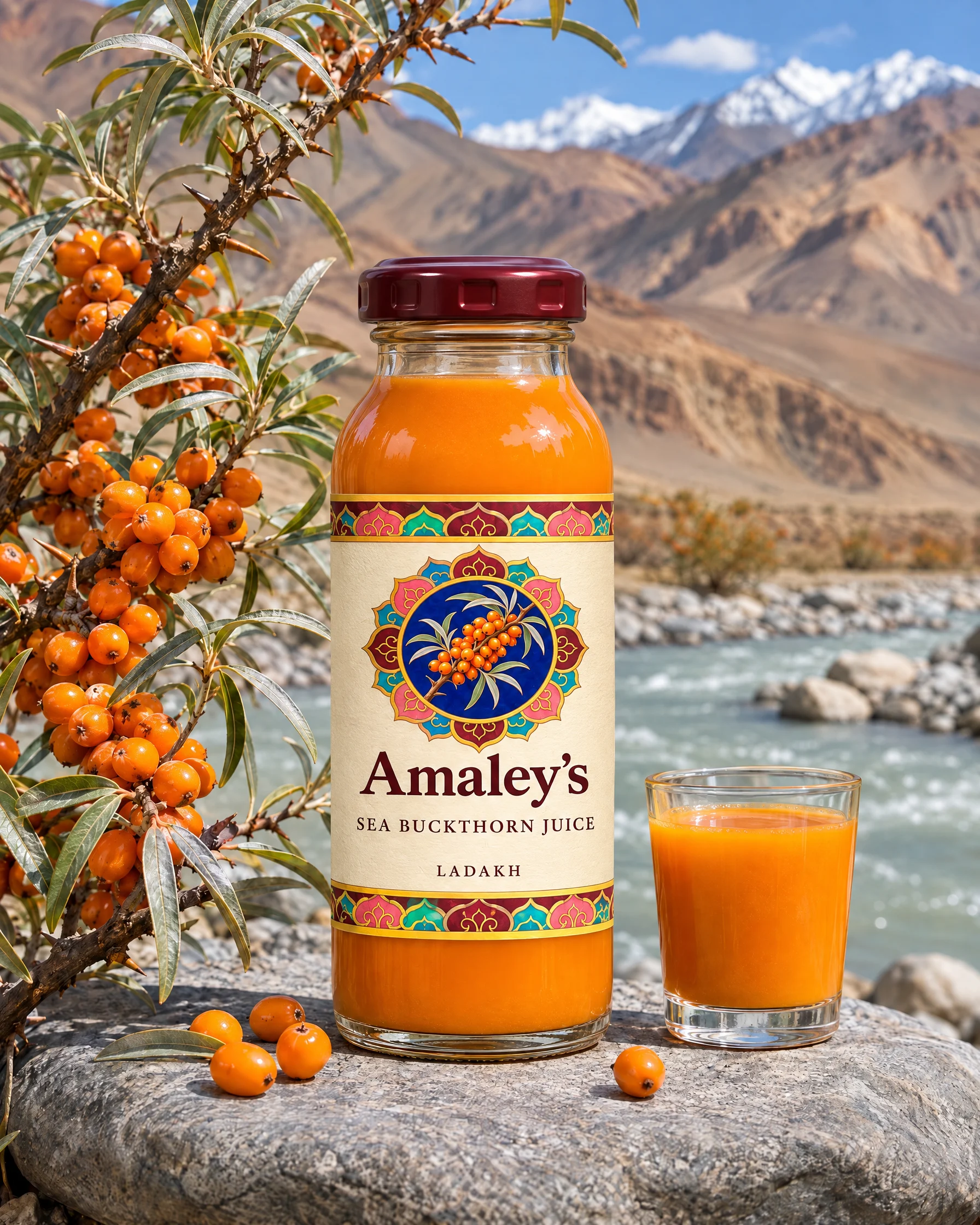
A glass bottle of orange Amaley's sea buckthorn juice with a maroon cap and a painted label, on a river stone beside a sea buckthorn branch and a small glass of juice.
JuiceSea buckthorn juice, pressed from the whole berry.
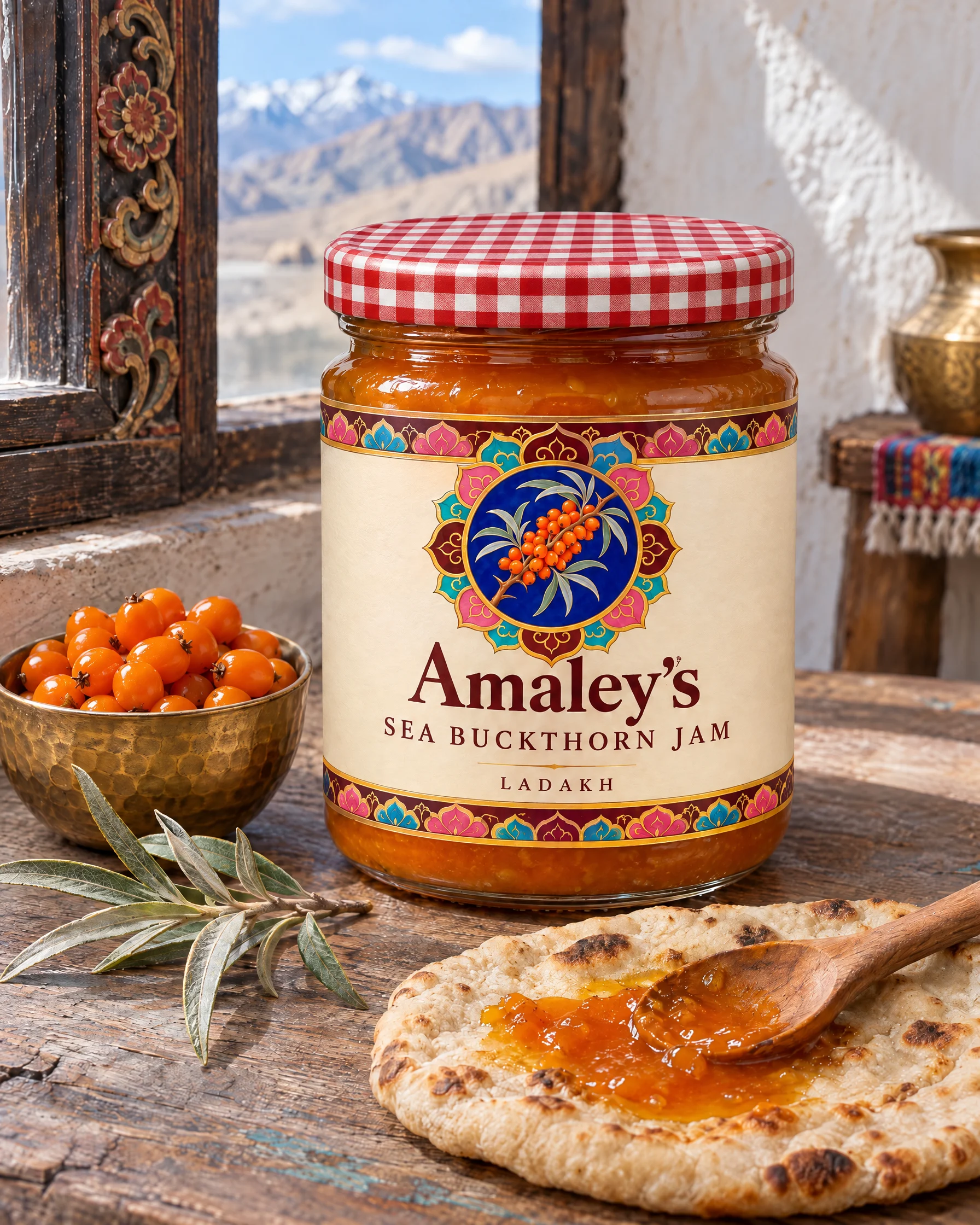
A jar of orange Amaley's sea buckthorn jam with a red-and-white checked lid and a painted label, on a wooden table by a carved window, with a bowl of berries and flat bread spread with jam.
JamSea buckthorn jam, cooked from the pulp.
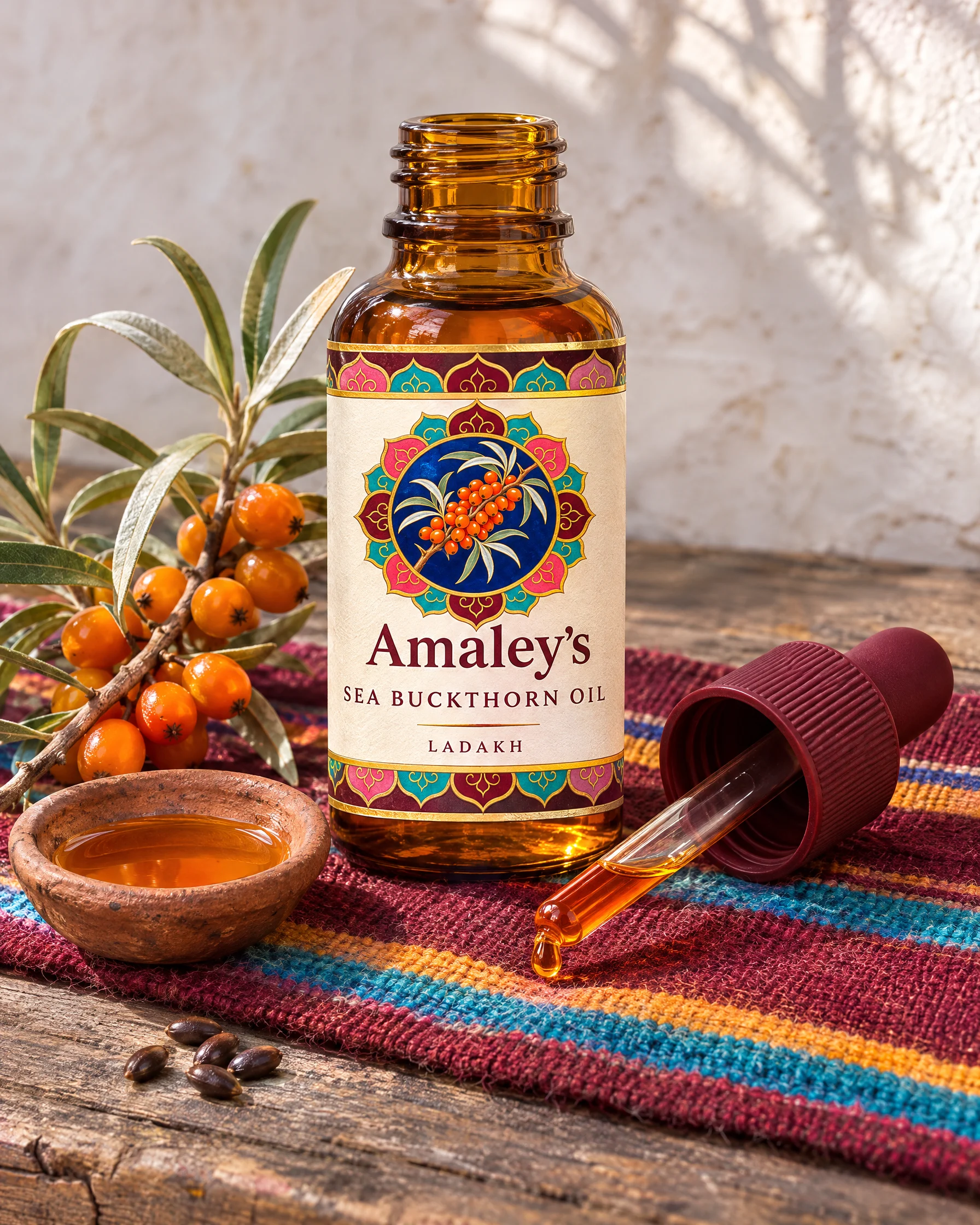
An amber dropper bottle of Amaley's sea buckthorn oil with a painted label, on striped wool cloth beside a dish of orange oil, a berry sprig and a few seeds.
OilSea buckthorn oil, extracted from the seed and the pulp.

Each part of the plant has its use
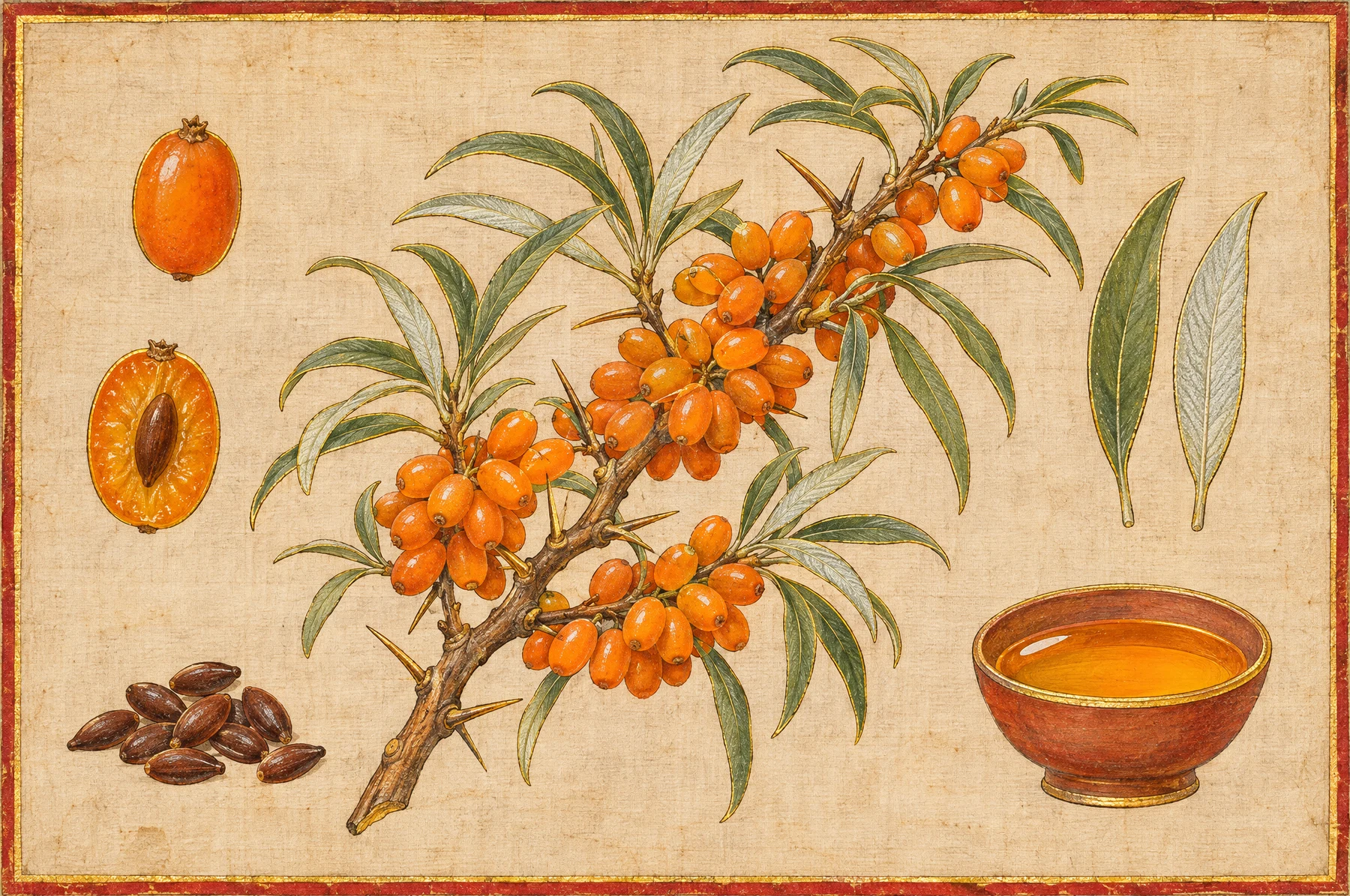
A painted study of a sea buckthorn branch with a whole berry, a berry cut in half to show its seed, loose seeds, two leaves and a bowl of oil.
  1. Juice and pulp

    Pressed from the whole berry.

  2. Jam

    Cooked from the pulp.

  3. Seed oil

    Extracted from the single seed inside each berry.

  4. Pulp oil

    Extracted from the pulp and skin. A natural source of omega-7 (palmitoleic acid).

  5. Leaf tea

    Dried sea buckthorn leaves.

  6. Supplements

    Made with the seed and pulp oils.

  7. Skincare

    Made with the oils, for resorts and spas.

Fruit is labelled by where it grows. Ladakh fruit is sold as Ladakh fruit, and fruit grown anywhere else is kept as a separate line.
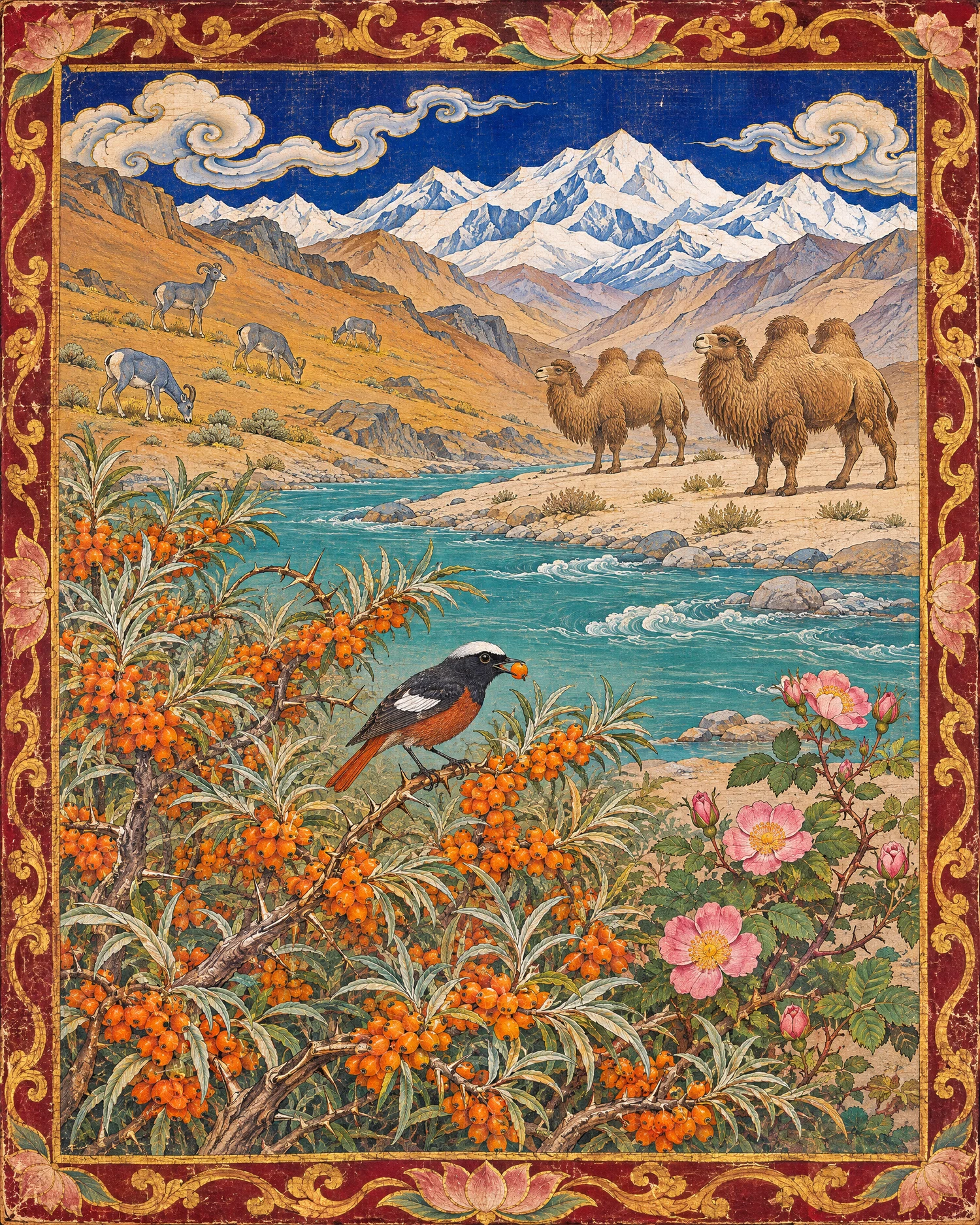
A painting in the Himalayan thangka style: a redstart eating a berry in a sea buckthorn thicket beside a turquoise river, with wild roses, two Bactrian camels, blue sheep and snow peaks.

Harvest note

Risks of overharvesting

Local birds, insects and soil ecosystems rely heavily on wild sea buckthorn thickets.

Conservation programmes, such as the Global Wildlife Program’s SECURE Himalaya initiative, emphasise sustainable harvesting.3 In practice that means leaving enough berries and intact shrubs behind, so that commercial picking does not deplete wildlife food or degrade habitats.

This is why we are looking into farming sea buckthorn, in British Columbia, Canada, or in Ladakh.

Leave berries

Enough fruit stays on the shrub for the birds and animals that feed on it.

Leave shrubs intact

Picking should not break up the thicket that wildlife and soil depend on.

Farm the rest

We are looking into orchards in British Columbia, Canada, or in Ladakh.